
What to Pack for a Gujarat Winter Trip: Kutch, Dwarka, Somnath and Gir
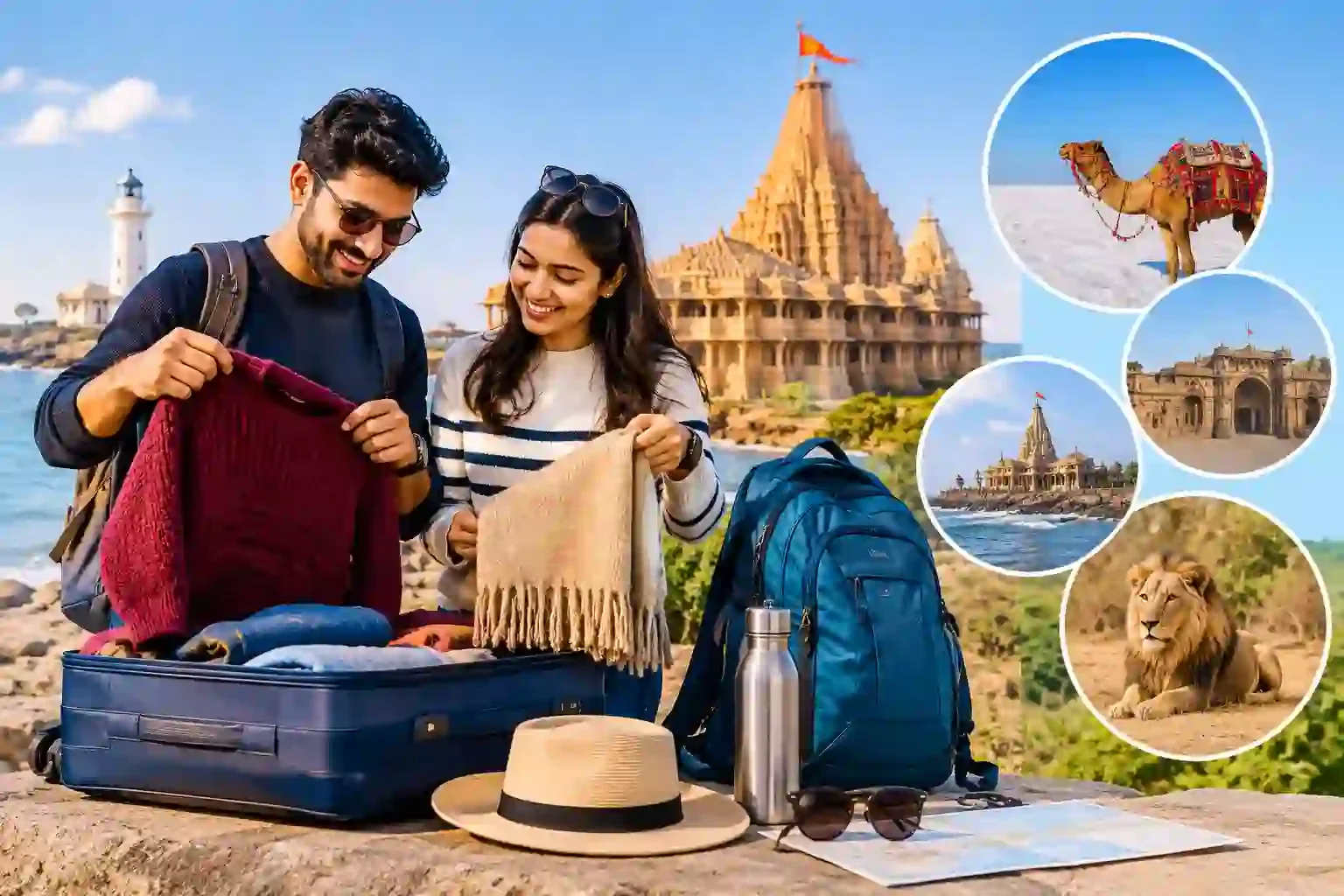
Here's a packing mistake we see every winter. Someone reads "Gujarat in December: pleasant weather," packs light cotton clothes and one shawl, and then spends a 6:30 am Gir safari shivering in an open jeep, and a Rann Utsav night wishing they'd brought a proper jacket.
The opposite mistake is just as common. A traveller loads a suitcase with woollens, then arrives in Dwarka, where the nights are mild, and carries a heavy jacket around for four days.
Gujarat isn't one climate, and a Gujarat trip isn't one kind of day. In a single week you might stand in a temple queue, ride a boat to an island, sit in an open jeep at dawn and watch the sun set over a salt desert. Each of those has different rules and different needs.
So this isn't a generic packing list. It's organised the way your trip actually runs: by place and by situation. If you're doing Kutch, Dwarka, Somnath and Gir in one go, you'll want most of it.
First, know what you're packing for
December and January are the comfortable months across Gujarat, but the three regions feel very different. Here's the rough picture. These are indicative figures from recent winters, and they vary year to year, so check the forecast a few days before you leave.
| Region | Daytime | Nights and early mornings | What it means for packing |
|---|---|---|---|
| Kutch / White Rann | Warm and sunny (Bhuj's December average high is around 29°C) | Can fall into the single digits or low teens, with wind on the open salt flats (Bhuj's December average low is around 13°C) | A real jacket, a scarf, and sun protection for the day |
| Gir (Sasan Gir) | Comfortable | An open jeep at 6:30 am can feel properly cold (around 15°C, plus wind chill) | Removable layers, a cap and something windproof |
| Dwarka and Somnath (coast) | Mild to warm | Mild, with Dwarka's recent December minimums around 17–20°C | Light clothing, one light layer for the evening breeze |
you don't need to dress for cold everywhere. You need to dress for cold in two places, the Rann at night and Gir at dawn, and for mild weather in the rest. Pack so you can add and remove layers rather than carrying one heavy item the whole way.
The core pack: what everyone needs
These go in the main bag no matter which part of the trip you're most excited about.
- Layers, not bulk. A few light tops, one warm mid-layer such as a fleece or a light sweater, and one windproof or padded jacket.
- Long trousers. For temples, safari and cooler evenings. Two or three pairs that you don't mind wearing twice.
- Comfortable closed shoes. You'll walk more than you expect, and the Rann and the forest are both dusty.
- Slip-on footwear. You'll remove shoes at every temple, often several times a day. Slip-ons save a lot of time.
- Socks. Temple floors in the early morning can be cold, and you'll want them for the Rann and the jeep too.
- Sun protection. Sunglasses, a cap or hat, sunscreen and lip balm. The sun is strong in winter and the salt flats reflect it.
- Moisturiser. The air is dry, especially in Kutch.
- A small day bag. Keep it light, for reasons we'll get to in a moment.
- Power bank and charger. You'll be photographing a lot, and some of the best moments happen when you can't be on your phone.
- Personal medicines and a basic kit for headaches, stomach upsets and minor cuts.
- A reusable water bottle.
For temple days: Dwarka and Somnath
This is where packing and rules meet, and where a little preparation saves a lot of stress.
Phones, cameras and bags usually stay outside. At both Dwarkadhish Temple in Dwarka and Somnath Temple, mobile phones and cameras aren't allowed inside, and lockers are available nearby. Other items such as bags and wallets are often restricted too, and the rules can be stricter on busy days. In Dwarka, local police have taken action against a visitor who carried a phone in, so it's worth taking seriously.
What this means for your packing:
- Carry as little as possible on temple days. A small pouch with ID, a little cash and the locker token is plenty.
- Leave valuables at the hotel or in the car with your driver, rather than juggling them at the lockers.
- Keep small notes handy. Lockers and shoe stands usually charge a small fee.
- Charge your phone beforehand. You won't be using it for photos inside.
Dress modestly. Dwarka's temple committee has put up notices saying shorts aren't permitted, and Somnath's management advises against mini-skirts, revealing tops and shorts. You don't need formal traditional clothes. Comfortable cotton clothing that covers shoulders and knees works well, whether that's kurtas, salwar sets, saris, or simple shirts and long trousers.
Think about your feet. You'll queue barefoot on stone, often early in the morning. Bring slip-on shoes and, if you feel the cold, a pair of thin socks to wear between the shoe stand and the temple entrance where that's allowed.
Timing helps. Arriving early in the morning generally means shorter queues and cooler stone underfoot. It's one more reason to keep your morning outfit simple.
If you're visiting the temples around Dwarka, such as Bet Dwarka and Nageshwar Jyotirlinga, the same approach works. Bet Dwarka involves a boat ride, so the sea breeze is something to dress for. A light windproof layer is more useful there than a woollen one.
If you'd rather have the whole temple circuit planned end to end, see our Dwarka Somnath tour packages or the Gujarat temple tour package.
For safari mornings: Gir
Gir is the one place on this route where being underdressed really costs you. The park runs on early starts, and the safari jeeps are open.
Dress in layers. Winter safari sessions start early, and the first hour in an open jeep can feel genuinely cold, especially with wind. Once the sun is up, you'll warm up quickly, so layers you can take off matter more than one thick coat.
A sensible safari outfit:
- A thermal or light base layer
- A fleece or sweater
- A windproof or padded jacket
- A scarf or buff (it also keeps dust off your face)
- A cap or woollen hat, depending on the hour
- Closed shoes and socks
- Sunglasses for later in the session
Choose muted colours. Earth tones such as olive, khaki, brown and grey are the usual advice for wildlife viewing. Avoid bright whites and loud colours.
Carry your original photo ID. This is important. Gir's official terms require every visitor to carry an original photo ID such as Aadhaar, PAN card, driving licence or voter ID, and entry isn't allowed without it. The same terms apply to the Devalia safari. The name and ID must match your booking. Photocopies and phone photos don't count, so keep the originals in your day bag the night before.
Pack for a long morning. Water, a small snack, and a spare layer. Keep your phone on silent, and check your hotel's early-morning departure time before you pack, since you may be leaving well before breakfast.
Camera note. If you're bringing a camera, ask whether a camera fee applies to your permit. It's often a separate charge.
Two useful things to know about the season. The winter timetable at Gir runs from 16 October to the end of February, and the Gir jungle safari is closed from 16 June to 15 October each year. If you'd like to see how a Gir safari fits into a bigger route, have a look at our Gir Jungle Safari tour package and the Sasan Gir National Park guide.
What you can leave at home
Packing well is partly about not packing. For this route, you can usually skip:
- Heavy woollens and thick down jackets. Unless you feel the cold intensely, one padded jacket and a few layers are enough.
- A lot of formal clothes. Temples need modesty, not formality.
- Valuable jewellery. You'll be leaving it in lockers or in the hotel anyway.
- Too many shoes. Slip-ons, closed walking shoes and perhaps a pair of sandals for the hotel will cover everything.
- White clothes that you want to keep white. Dust gets into everything on safari days and in the Rann.
Planning your own route
If you'd like the logistics handled for you, browse our Gujarat tour packages and we'll build the route around your dates.
Not sure what to expect on your dates? Get in touch with your route and travel dates and we'll tell you what to pack and what to expect. You can also call us on +91 7317742334
Need Assistance With This Destination?
Our certified destination specialists can customize a hassle-free itinerary for you.
Popular Tours to Pair With This Blog
 8 Nights / 9 Days
8 Nights 9 Days Gujarat Package
Vadodara → Statue Of Unity → Bhavnagar → Diu → Sasangir → Junagadh → Somnath → Dwarka → Ahmadabad To Rani Ki Vav → Ambaji
 4 Nights / 5 Days
Dwarka Somnath Tour Packages
Ahmedabad – Dwarka – Bet Dwarka – Porbandar – Somnath – Virpur – Gondal – Rajkot – Akshardham
 4 Nights / 5 Days
Wildlife and Beach Of Gujarat
Ahmedabad – Little Rann Of Kutch – Mandvi – Wankaner – Rajkot
More Travel Blogs & Insights
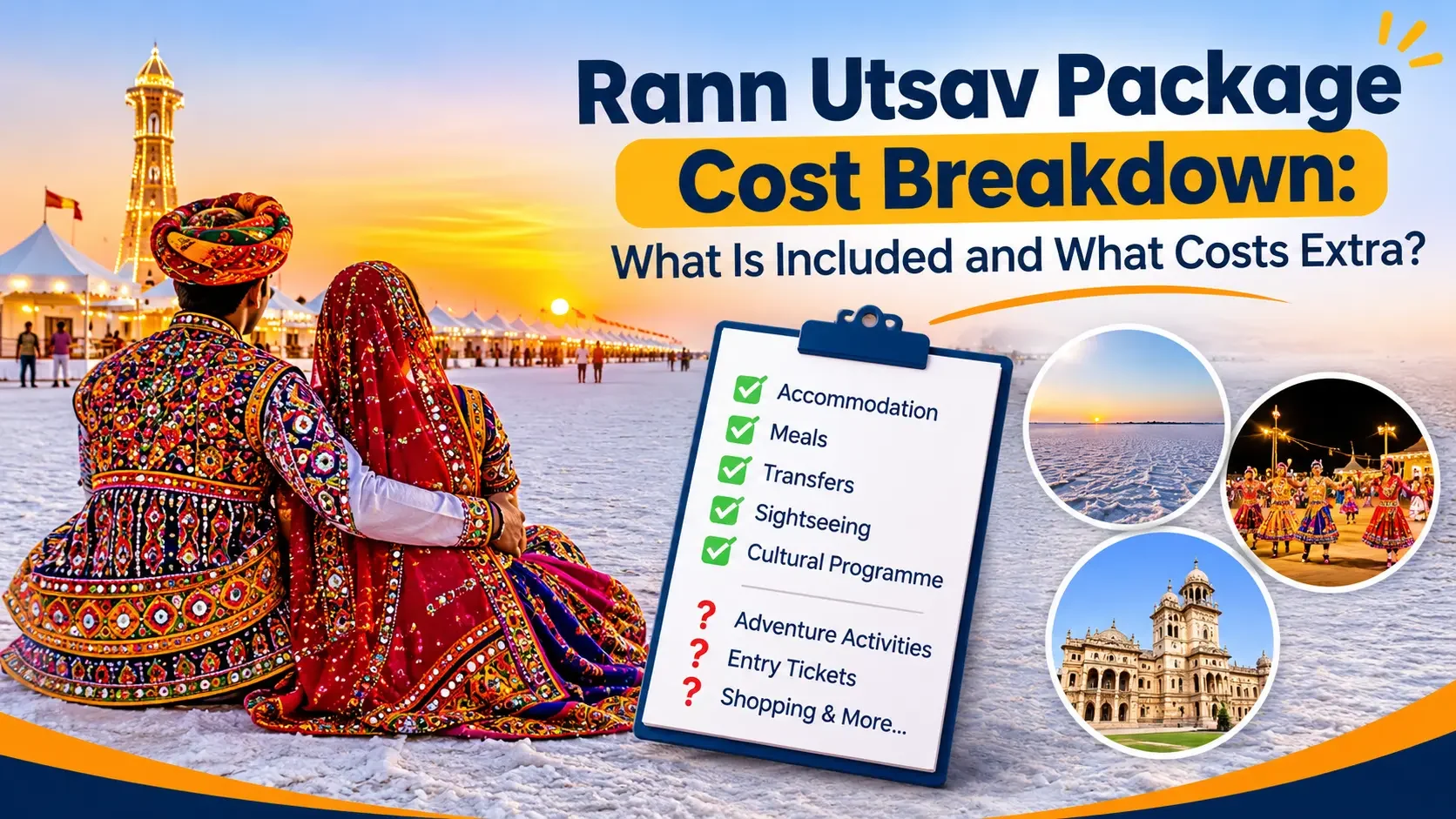
Rann Utsav Package Cost Breakdown: What Is Included and What Costs Extra?
Here's how we'd read one of our own packages, the Rann Utsav Tour 2026. It's listed at ₹9,100 per person for an A.C. Premium stay, and the itinerary spells out what that covers.
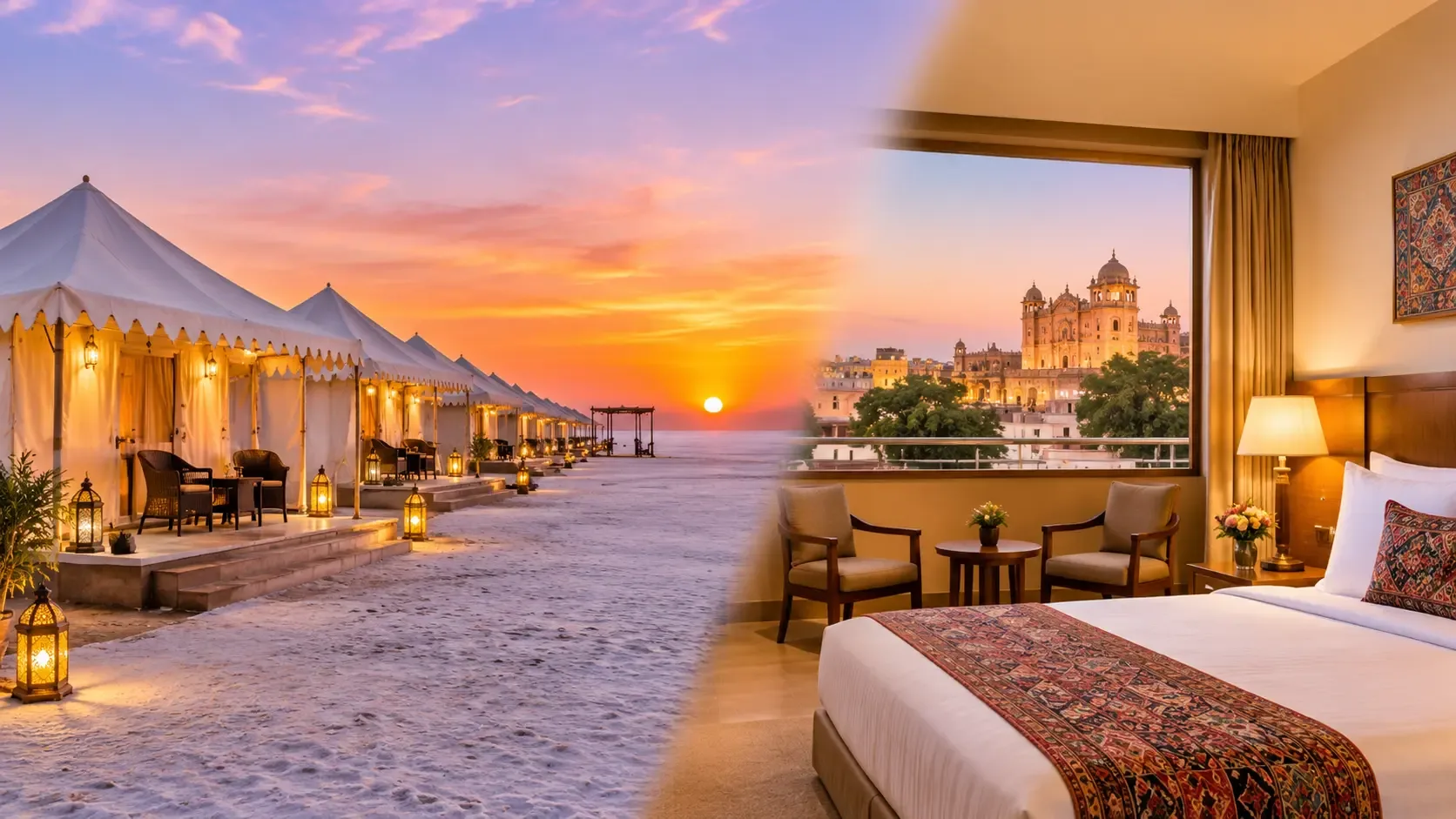
Rann Utsav Tent Stay vs Bhuj Hotel: Which Is Better for Your December Trip?
Rann Utsav is a seasonal tent settlement at Dhordo, right at the edge of the White Rann. The 2026–27 season runs from 1 November 2026 to 7 March 2027, so December is squarely in the middle of it. It's built every winter, which means it has its own rhythm: scheduled cultural programmes in the evening, fixed meal timings, organised trips to the salt.
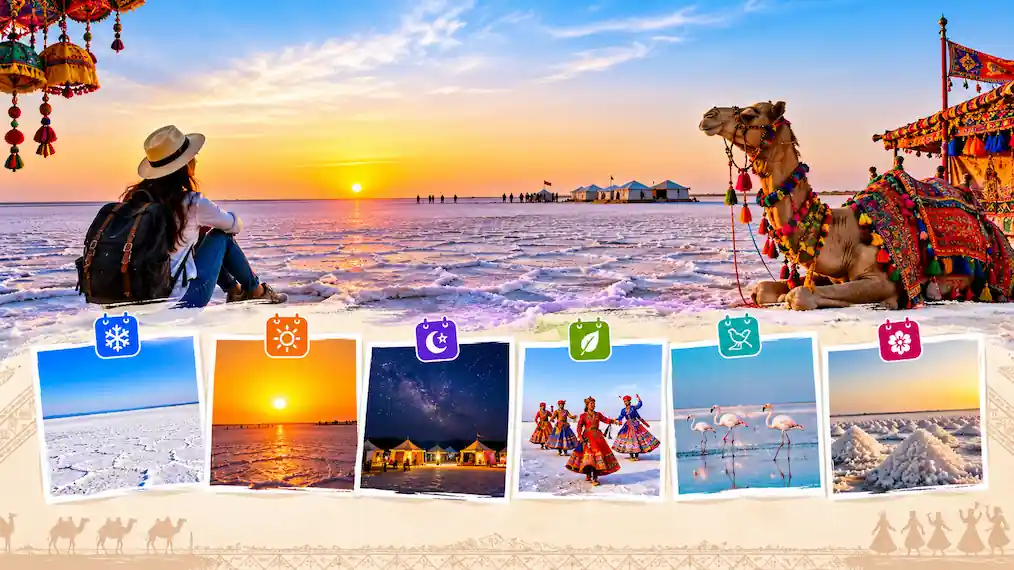
Best Time to Visit Rann of Kutch: Month-Wise Guide for 2026–27
The best time to visit Rann of Kutch is from November to February, when the weather stays pleasant, the White Rann is accessible, and Rann Utsav brings music, crafts, food, and desert celebrations to Kutch. For the most comfortable experience, plan your trip around December or January; for fewer crowds, consider November or February. The ...