
Introduction
Gujarat, the land of vibrant culture and ancient temples, holds a sacred place in India’s spiritual geography. Among its many holy sites, the Shakti Peethas — dedicated to Goddess Shakti — are revered by devotees who seek divine blessings and spiritual fulfillment. But how many Shakti Peeths are actually in Gujarat? Let’s explore the mystical roots and the sacred power centers that make Gujarat a major destination for pilgrims across India.
The Concept of Shakti Peethas
According to Hindu mythology, Shakti Peethas are the divine spots where the body parts of Goddess Sati fell when Lord Shiva carried her body in grief after her self-immolation. Each site represents the powerful presence of the Mother Goddess in different forms. There are traditionally 51 Shakti Peethas across the Indian subcontinent, each symbolizing a sacred energy center.
How Many Shakti Peeths Are There in Gujarat?
Gujarat is home to three prominent Shakti Peethas, each holding immense religious importance and historical significance. These shrines are visited by thousands of devotees, especially during Navratri and other auspicious days.
Let’s explore the three main Shakti Peeths in Gujarat:
1. Ambaji Temple – The Most Revered Shakti Peeth
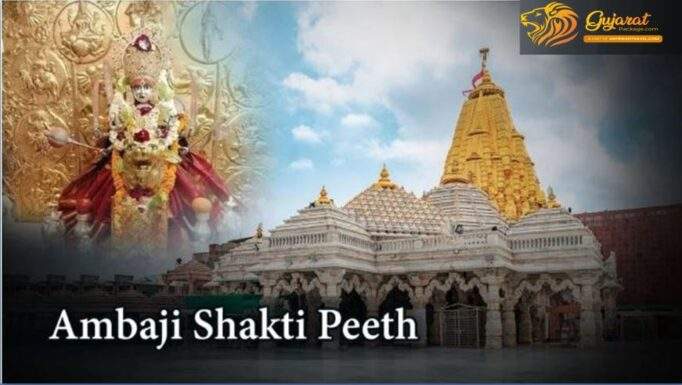
Located in the Banaskantha district, near the Gujarat–Rajasthan border, Ambaji Temple is one of the most famous Shakti Peethas in India. It is believed that the heart of Goddess Sati fell here. The temple does not house any idol; instead, the Shree Yantra, representing the divine energy of Goddess Amba, is worshipped.
Location: Ambaji, Banaskantha District
Significance: The heart of Goddess Sati is said to have fallen here.
Best Time to Visit: During Bhadarvi Poonam and Navratri Festival when grand celebrations take place.
2. Mahakali Temple, Pavagadh – A Part of the UNESCO World Heritage Site
Situated atop Pavagadh Hill in the Panchmahal district, near Champaner, the Kalika Mata Temple is another major Shakti Peeth in Gujarat. It is believed that the toe of Goddess Sati fell here. This temple is also part of the Champaner-Pavagadh Archaeological Park, a UNESCO World Heritage Site, attracting both devotees and history enthusiasts.
Location: Pavagadh Hill, Panchmahal District
Significance: The right toe of Goddess Sati is said to have fallen here.
Special Note: A cable car ride is available to reach the temple top.
3. Koteshwari Mata Temple, Kutch – The Northern Shakti Peeth
In the remote region of Kutch, the Koteshwari Mata Temple stands as a spiritual beacon near Koteswar village. It is believed that the ribs of Goddess Sati fell at this site. The temple is beautifully situated near the Arabian Sea, adding to its divine aura and scenic charm.
Location: Koteshwar, Kutch District
Significance: The ribs of Goddess Sati are said to have fallen here.
Nearby Attraction: The famous Rann of Kutch, known for the Rann Utsav festival.
Spiritual Significance of Shakti Peeths in Gujarat
These sacred shrines are not just temples; they are centers of energy, devotion, and faith. Devotees believe that visiting all three Shakti Peeths in Gujarat cleanses the soul and brings peace, prosperity, and spiritual strength. The ambiance, rituals, and local traditions reflect Gujarat’s deep-rooted connection with Shaktism — the worship of the divine feminine power.
Travel Tips for Devotees
Best Time to Visit: October to February (pleasant weather and festival season).
Nearby Attractions: Dwarka, Somnath, Gir National Park, and Rann of Kutch.
Local Culture: Enjoy vibrant folk dances, music, and authentic Gujarati cuisine during your visit.
Conclusion
To sum up, there are three main Shakti Peeths in Gujarat — Ambaji Temple, Pavagadh Kalika Mata Temple, and Koteshwari Mata Temple. Each of these holy sites represents a unique form of Goddess Shakti and holds timeless spiritual energy that continues to inspire devotees from around the world. If you are planning a divine journey, make sure to include these sacred shrines in your Gujarat pilgrimage and experience the divine power that this state radiates.