
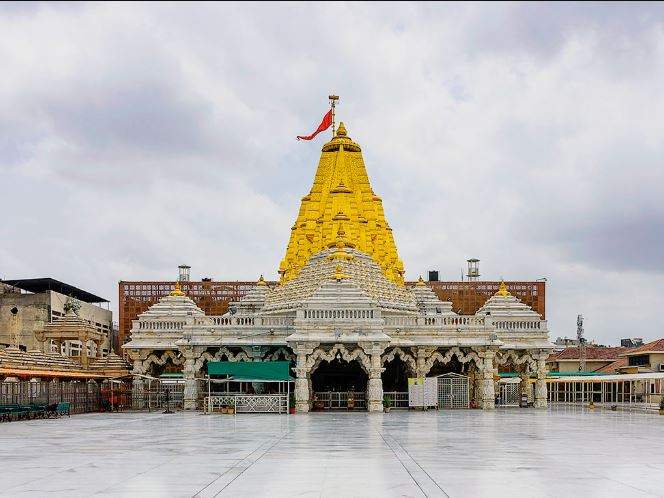
Ambaji Shaktipeeth Gujarat is one of the most revered pilgrimage destinations in India, dedicated to Maa Amba, a powerful form of Goddess Durga. Located in the Banaskantha district of Gujarat, near the Rajasthan border, Ambaji is counted among the 51 Shaktipeeths, where it is believed that the heart of Goddess Sati fell. This divine town attracts millions of devotees every year who come seeking blessings, spiritual peace, and divine energy.
Unlike many temples, Ambaji Mandir has a unique spiritual tradition—there is no idol inside the sanctum, only a sacred Shree Yantra worshipped as the manifestation of the Goddess. This mystery and purity make Ambaji Shaktipeeth truly special among all Shakti temples in India.
Spiritual Importance of Ambaji Shaktipeeth
Ambaji is not just a temple; it is a Shakti Sthala, a place charged with cosmic energy. According to Hindu mythology, when Lord Vishnu used his Sudarshan Chakra to dismember Goddess Sati’s body, her heart (Hriday) fell at Ambaji, making it one of the most powerful Shaktipeeths.
Devotees believe that visiting Ambaji removes negativity, fulfills wishes, and brings mental peace. The temple is especially significant during Navratri, Bhadarvi Poonam, and Diwali, when lakhs of pilgrims gather to offer prayers.
What Is Special in Ambaji?
Ambaji Shaktipeeth stands out for several unique and divine reasons:
No idol worship – Instead of a statue, devotees worship a Shree Yantra engraved on a golden plate
The name “Ambaji” is never written inside the sanctum, it is only symbolized
The temple follows Tantric traditions rather than regular idol rituals
The divine energy of the temple is believed to be extremely powerful
One of the most important Shaktipeeths connected to Goddess Sati
This spiritual uniqueness makes Ambaji different from all other temples in Gujarat and India.
What Is the Timing of Darshan at Ambaji Temple?
Devotees can visit Ambaji Mandir throughout the year. The general darshan timing is:
Morning Darshan: 7:00 AM to 11:30 AM
Afternoon Break: 12:00 PM to 2:30 PM
Evening Darshan: 2:30 PM to 6:30 PM
Aarti Time: Around 7:00 PM
During Navratri and festivals, darshan timings may extend, and special arrangements are made for pilgrims.
How Many Steps Are in Ambaji Temple?
Ambaji Temple itself does not require climbing steps to reach the sanctum, making it easily accessible for elderly devotees and families.
However, nearby sacred hills like Gabbar Hill (Gabbar Parvat)—believed to be the original seat of Goddess Amba—have around 999 steps. Many devotees climb these steps barefoot as an act of devotion and faith.
What Is the Timing of Ambaji Mandir Ropeway?
For the convenience of pilgrims visiting Gabbar Hill, a modern ropeway facility has been introduced.
Ambaji Ropeway Timings:
Morning: 8:00 AM
Evening: 6:00 PM
The ropeway provides a comfortable and scenic ride, especially beneficial for senior citizens and families who may find climbing steps difficult. It offers breathtaking views of the surrounding Aravalli ranges and enhances the spiritual experience.
Best Time to Visit Ambaji Shaktipeeth Gujarat
The ideal time to visit Ambaji is from October to March, when the weather is pleasant. Navratri is the most vibrant time, filled with devotion, garba, and spiritual celebrations, though it can be very crowded.
Plan Your Ambaji Visit with Gujarat Tour Packages
Ambaji is well-connected by road from Ahmedabad, Palanpur, Mount Abu, and Abu Road. Many pilgrims combine Ambaji with Mount Abu or other Gujarat religious destinations.
For a comfortable and well-organized journey, you can explore customized Gujarat Tour Packages that include Ambaji Shaktipeeth along with other sacred and cultural attractions.
Ambaji Shaktipeeth Gujarat is a divine destination where faith, mystery, and spiritual power come together. From the sacred Shree Yantra to the holy Gabbar Hill, every corner of Ambaji radiates devotion. Whether you are a pilgrim, spiritual seeker, or cultural traveler, Ambaji offers an unforgettable spiritual experience that touches the soul.